Signs of a chimney fire
Creosote, the residue of wood smoke, lines the flue and burns very hot. Some chimney fires roar; many smolder quietly and are only found later. Either way, the chimney should not be used again until it has been inspected.
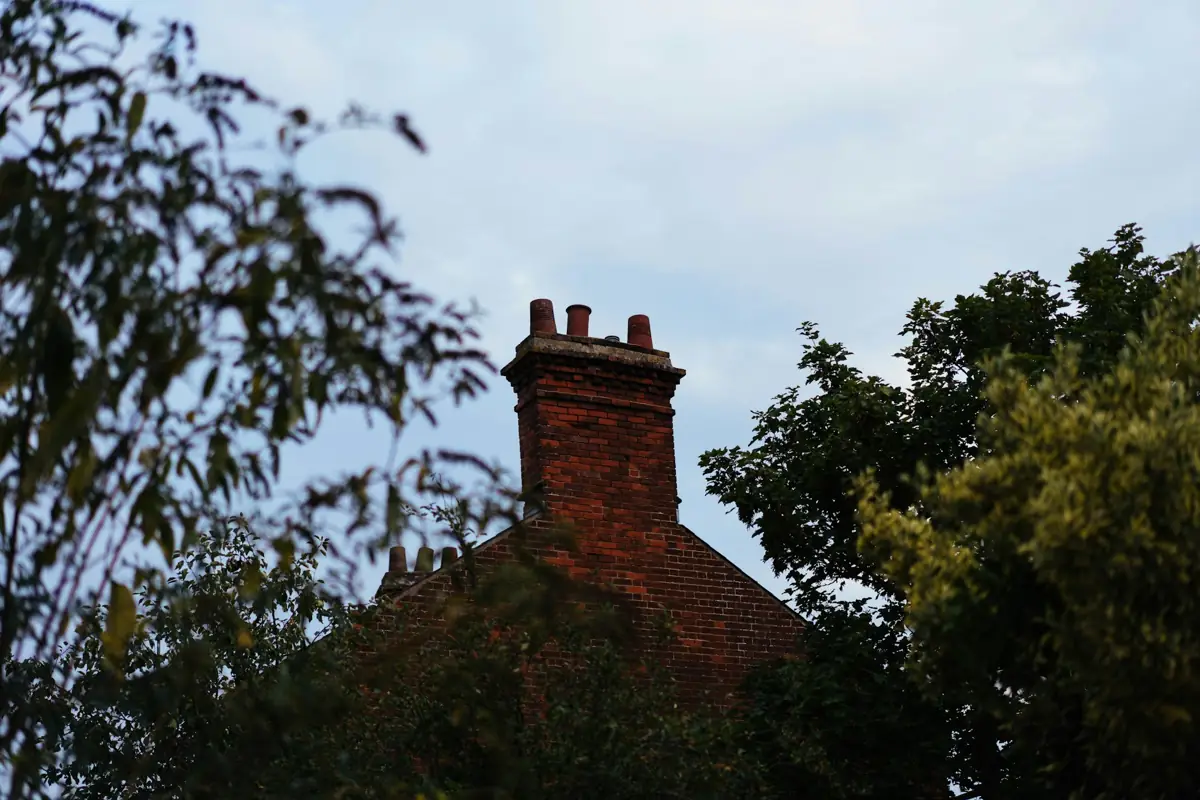
During a fire
- A loud roar or rumble, like a train or a jet.
- Dense smoke and a strong hot smell. Sometimes flames or sparks out of the top of the chimney.
- A chimney or wall that feels very hot.
Get everyone out and call 911. If you can do it safely on the way out, close the fireplace doors or the damper to starve it of air. Don't pour water into a hot firebox.
After a quiet one
A slow chimney fire can burn without anyone noticing. Signs a sweep looks for:
- Puffy or honeycombed creosote, unlike the usual hard or sooty deposit.
- Cracked or collapsed flue tiles, or pieces of tile in the firebox.
- A warped damper, a distorted cap, or discolored metal on a factory-built flue.
- Heat damage to the roof or nearby wood.
The inspection to get
NFPA 211 calls for a Level II inspection on sale or transfer of the property and before a flue is relined. It also calls for one when an appliance is added or removed or swapped for a different type, and after a chimney fire or any other event likely to have damaged the chimney. The camera matters, because the damage a chimney fire does is usually inside the liner. Chimney inspections.
How to prevent the next one
- Burn dry hardwood. The EPA says wood burns best at a moisture content under 20 percent, to season it at least six months, test it with a moisture meter, and never to burn household trash or plastics. Firewood in San Antonio.
- Have the chimney inspected yearly and swept when the inspection finds buildup.
- Heating was the second leading cause of US home fires in 2021, with an estimated 32,200 home heating fires, 190 deaths and $442 million in property loss.
Questions San Antonio homeowners ask
Can a chimney fire go out on its own?
Often, which is why many go unnoticed. The damage stays, though. Have the chimney inspected before using it again.
Does insurance cover chimney fire damage?
Many homeowner policies cover sudden fire damage, including to the chimney. Call your insurer and document everything with photos.
How do I know if I had a chimney fire?
Look for puffy, honeycombed creosote, pieces of flue tile in the firebox, or a warped damper or cap. A Level II inspection confirms it.